
Sodium Metasilicate Distributor Sourcing Guide
Buyer guide for sodium metasilicate distributors planning bulk grades, packaging, documents, landed cost, inventory, and recurring supplier support.
Why distributor sourcing is different from an end-user purchase
A sodium metasilicate distributor buys for more than one downstream customer. The purchasing decision must support resale, warehouse handling, document requests, repeat availability and consistent specifications across several applications. A product that works for one factory may not be the right stock item for the full customer base.
For this reason, distributor sourcing should begin with customer segments and recurring requirements. Detergent producers, industrial cleaning formulators, textile processors and water-treatment chemical companies may ask for different forms, particle characteristics, packing or technical documents. The portfolio must be defined before asking for a wholesale quotation.
How a sodium metasilicate distributor should plan grades
Avoid listing only a generic product name. Separate sodium metasilicate granules, anhydrous sodium metasilicate and sodium metasilicate pentahydrate in the purchasing specification. Each form can have different handling, dissolution, storage and customer-application implications.
A focused opening portfolio is usually easier to control than a long catalogue of loosely defined grades. Start with the products supported by repeat customer demand, then validate specifications and samples with the customers most likely to reorder.
- Map each proposed grade to the applications and customers expected to buy it.
- Record required Na2O, SiO2, appearance, Fe and insoluble-matter limits from the applicable specification.
- Confirm particle size or bulk density when dosing, dust or dry-blend behavior matters.
- Keep customer-specific requirements separate from the supplier's standard grade description.
Specification control and batch consistency

Distributors carry the risk of supplying several customers from one imported lot. Before building inventory, compare the supplier's TDS and sample COA with the limits promised to customers. When a customer provides its own specification, request a line-by-line confirmation instead of relying on a similar grade name.
For repeat orders, ask how batch identification, test results and COA format will be maintained. Any requested limit outside the standard specification should be confirmed in writing before the purchase order. Samples support evaluation, but they do not replace batch-specific order documents.
Packaging, labels and warehouse handling
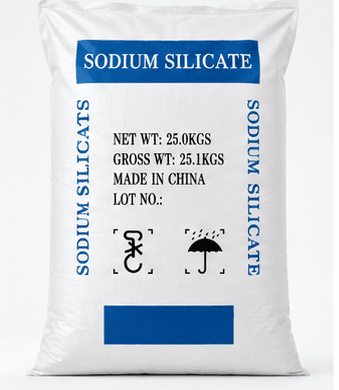
Sodium metasilicate packaging affects warehouse efficiency, moisture protection, resale presentation and delivered cost. Confirm the bag material, net weight, liner, sealing method, batch marking and pallet configuration before comparing prices. Neutral bags, supplier-branded bags and distributor-branded bags require different artwork and lead-time review.
The distributor should also confirm whether the bags will be sold as imported or repacked locally. Local regulations, workplace labeling, language requirements and customer instructions remain the buyer's responsibility and should be checked for the destination market.
- Bag size and construction
- Neutral, supplier or private-label printing
- Palletized or non-palletized loading
- Batch number and production-date marking
- Moisture protection during storage and inland delivery
Documents that support distributor sales
A distributor needs documents for both internal approval and downstream customer support. The basic review package normally includes TDS, SDS or MSDS, sample COA, packing information and company credentials. Batch COA, commercial invoice, packing list and shipment documents are tied to the actual order.
Do not advertise a certificate or regulatory status until the exact document scope, issuer, validity and product coverage have been checked. If a customer needs a special statement or COA test item, send the request before quotation so feasibility and cost can be reviewed.
Compare landed cost, not only the factory price
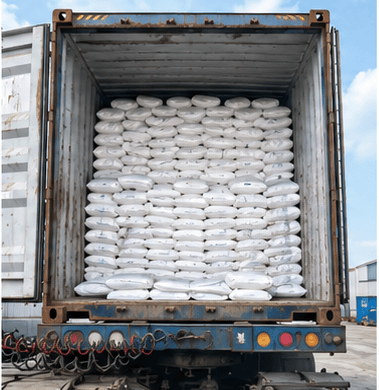
A low ex-factory price may not create the lowest landed cost. Packaging, pallet use, container utilization, origin handling, freight, insurance, import charges, local delivery and financing time all affect the cost of saleable inventory. Compare offers on the same Incoterm and destination basis.
Inventory cost also includes slow-moving grades and the risk of holding the wrong packaging. Ask for a loading proposal by grade and calculate landed cost per metric ton and per bag before confirming the mix.
Supplier support for recurring distributor orders
Distributor relationships require predictable communication after the first order. Review how the supplier confirms production, packing, inspection, loading and shipment documents. Ask how specification questions and quality claims are documented and escalated.
Annual demand information can help both sides discuss production allocation and shipment cadence, but commercial commitments should be based on confirmed quotations and purchase terms. Do not treat an indicative conversation as guaranteed capacity or fixed pricing.
Distributor RFQ checklist
A complete RFQ reduces repeated clarification and makes supplier quotations easier to compare. Send the same request package to every shortlisted source and record all exceptions before approving the purchase order.
- Grade, form and target specification for every SKU
- Trial quantity, FCL mix and expected annual demand
- Bag, label, liner, pallet and marking requirements
- Destination port, Incoterm and requested shipment window
- TDS, SDS/MSDS, sample COA, batch COA and certificate requirements
- Sample-testing plan and customer-specific limits
FAQ
Which grades should a sodium metasilicate distributor stock?
What documents should a bulk sodium metasilicate supplier provide?
How should distributors compare sodium metasilicate quotations?
Can different sodium metasilicate grades be combined in one shipment?
What information should a distributor include in an RFQ?
Ready to RFQ
A quotation needs grade and monthly quantity (MT), plus packing, destination port and buyer type. The form will not submit without these. Approved TDS, SDS and stamped COA samples are on Downloads; a shipment COA is issued per order. No prices are shown on the form.
- Grade
- Monthly quantity (MT)
- Packing
- Destination port
- Documents needed
Prefer WhatsApp? +86 176 8588 0260